
Overview
Cleaning gutters is essential home maintenance that prevents water damage, but it can be dangerous if not done safely. This guide covers the safest methods for cleaning gutters, from ladder setup to debris removal, ensuring you protect both your home and yourself during the process.
Why This Matters
Clogged gutters cause thousands of dollars in damage annually through foundation problems, basement flooding, and roof leaks. However, gutter cleaning accidents send thousands of people to emergency rooms each year. Learning safe techniques protects both your home and your safety.
Safety First: Essential Precautions
Ladder Safety
Before starting:
- Inspect ladder for damage or loose rungs
- Choose right height - Ladder should extend 3 feet above gutter
- Place on level ground - Use levelers if needed
- Maintain proper angle - 75-degree angle (1 foot out for every 4 feet up)
- Have a spotter - Someone to hold ladder and watch for problems
- Wear non-slip shoes - Never work in wet or slippery conditions
Personal Protective Equipment
Required:
- Work gloves - Protect from sharp debris and edges
- Safety glasses - Prevent debris from entering eyes
- Long sleeves - Protect from scratches
- Sturdy shoes - Non-slip, closed-toe
Step 1: Prepare Your Work Area
Set Up Safely
- Clear area around house - Remove obstacles
- Position ladder correctly - Stable, proper angle
- Place bucket or tarp - To catch debris (don't drop on ground)
- Have tools ready - Within easy reach
- Check weather - Don't work in rain, wind, or icy conditions
Gather Tools
Essential tools:
- Sturdy ladder
- Gutter scoop or trowel
- Garden hose with spray attachment
- Bucket or tarp for debris
- Work gloves and safety glasses
Step 2: Remove Debris
Working from Ladder
Safe technique:
- Start near downspout - Work away from it
- Scoop debris into bucket or onto tarp
- Work in sections - 3-4 feet at a time
- Never overreach - Move ladder frequently
- Keep three points of contact - Two hands, one foot, or two feet, one hand
Debris Removal Tips
- Work systematically - Don't skip sections
- Remove large debris first - Leaves, twigs, branches
- Check for blockages - Especially at corners and downspouts
- Place debris carefully - Don't drop from height
Step 3: Flush Gutters
After Removing Debris
- Use garden hose with spray nozzle
- Start at end opposite downspout
- Flush toward downspout - Push remaining debris
- Check water flow - Should flow freely
- Inspect for leaks - Look for water escaping
Downspout Cleaning
If downspout is clogged:
- Remove debris from top opening
- Flush with hose from top
- Check bottom - Water should flow freely
- Use plumber's snake if severely clogged
Step 4: Inspect While Cleaning
Look for Problems
While cleaning, check for:
- Sagging sections - May need reattachment
- Leaks or holes - Note for repair
- Loose hangers - Gutter pulling away from house
- Rust or corrosion - May indicate replacement needed
- Proper pitch - Should slope toward downspout
Alternative Methods
Ground-Level Tools
If uncomfortable on ladder:
- Gutter cleaning tools - Extendable tools from ground
- Wet/dry vacuum - With gutter attachment
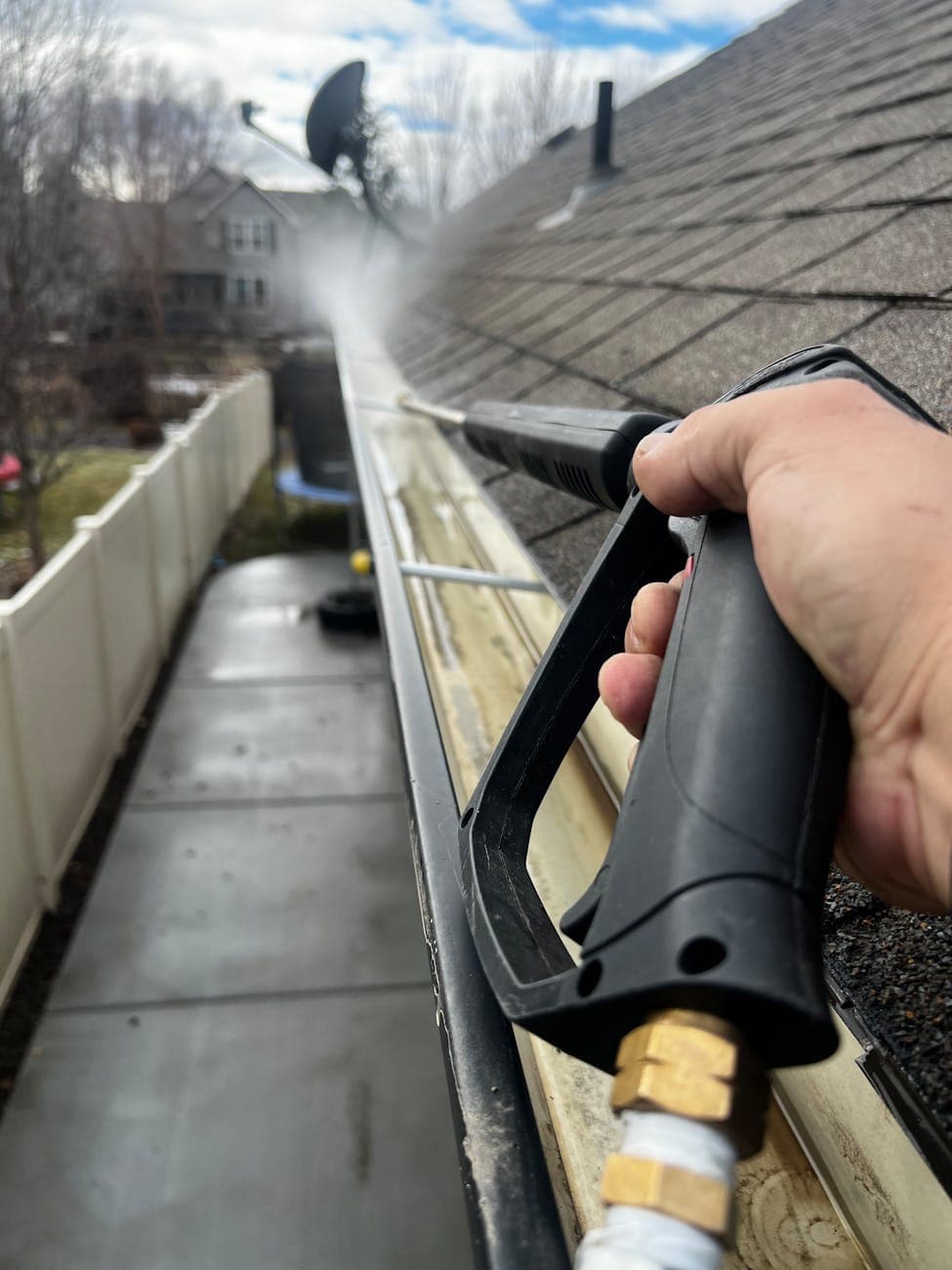
- Pressure washer - With gutter cleaning wand
Limitations:
- Less thorough than hands-on cleaning
- May miss some debris
- Still need ladder for inspection
Professional Service
Consider hiring if:
- Roof is very high or steep
- Uncomfortable on ladders
- Physical limitations
- Want comprehensive service (cleaning + inspection + repairs)
Common Mistakes to Avoid
Safety Mistakes
Don't:
- Overreach - Move ladder instead
- Work alone - Always have spotter
- Use damaged ladder - Inspect first
- Work in bad weather - Wait for safe conditions
- Rush - Take your time
Cleaning Mistakes
Don't:
- Skip sections - Clean thoroughly
- Ignore downspouts - They need cleaning too
- Forget to flush - Removes fine debris
- Skip inspection - Catch problems early
When to Clean Gutters
Seasonal Schedule
Spring:
- After winter - Remove debris from storms
- Before heavy rains - Prepare for spring weather
Fall:
- After leaves fall - Most important cleaning
- Before winter - Prevent ice dams
As needed:
- After severe storms - Check for blockages
- If you notice problems - Overflow, sagging, etc.
Prevention Tips
- Install gutter guards - Reduces cleaning frequency
- Trim overhanging branches - Less debris accumulation
- Clean regularly - Easier when done frequently
- Inspect after storms - Catch problems early
- Maintain proper pitch - Ensures water flows correctly
When to Call a Professional
Call a professional if:
- Roof is very high or steep
- You're uncomfortable on ladders
- Gutters need repairs - Sagging, leaks, etc.
- You want gutter guards installed
- Multiple issues need addressing
Cost Considerations
DIY cleaning:
- Tools: $50-$150 (one-time)
- Time: 1-2 hours
- Total: Minimal ongoing cost
Professional service:
- Per cleaning: $100-$300
- Annual service: $200-$500
- With repairs: $300-$1,000+
Conclusion
Cleaning gutters safely requires proper preparation, the right tools, and careful technique. Never compromise on safety—use a stable ladder, have a spotter, and work methodically. Regular cleaning prevents expensive water damage and keeps your gutters functioning properly. When in doubt, especially for high or steep roofs, professional service is a wise investment.
Frequently Asked Questions
How often should I clean my gutters?
Clean gutters at least twice yearly—spring and fall. Homes with many trees may need cleaning 3-4 times per year.
Can I clean gutters without a ladder?
Some tools allow ground-level cleaning, but they're less effective. For thorough cleaning, a ladder is usually necessary. Always prioritize safety.
What's the biggest safety risk when cleaning gutters?
Falls from ladders are the most common injury. Always use a stable ladder, have a spotter, and never overreach. Use proper ladder safety techniques.