
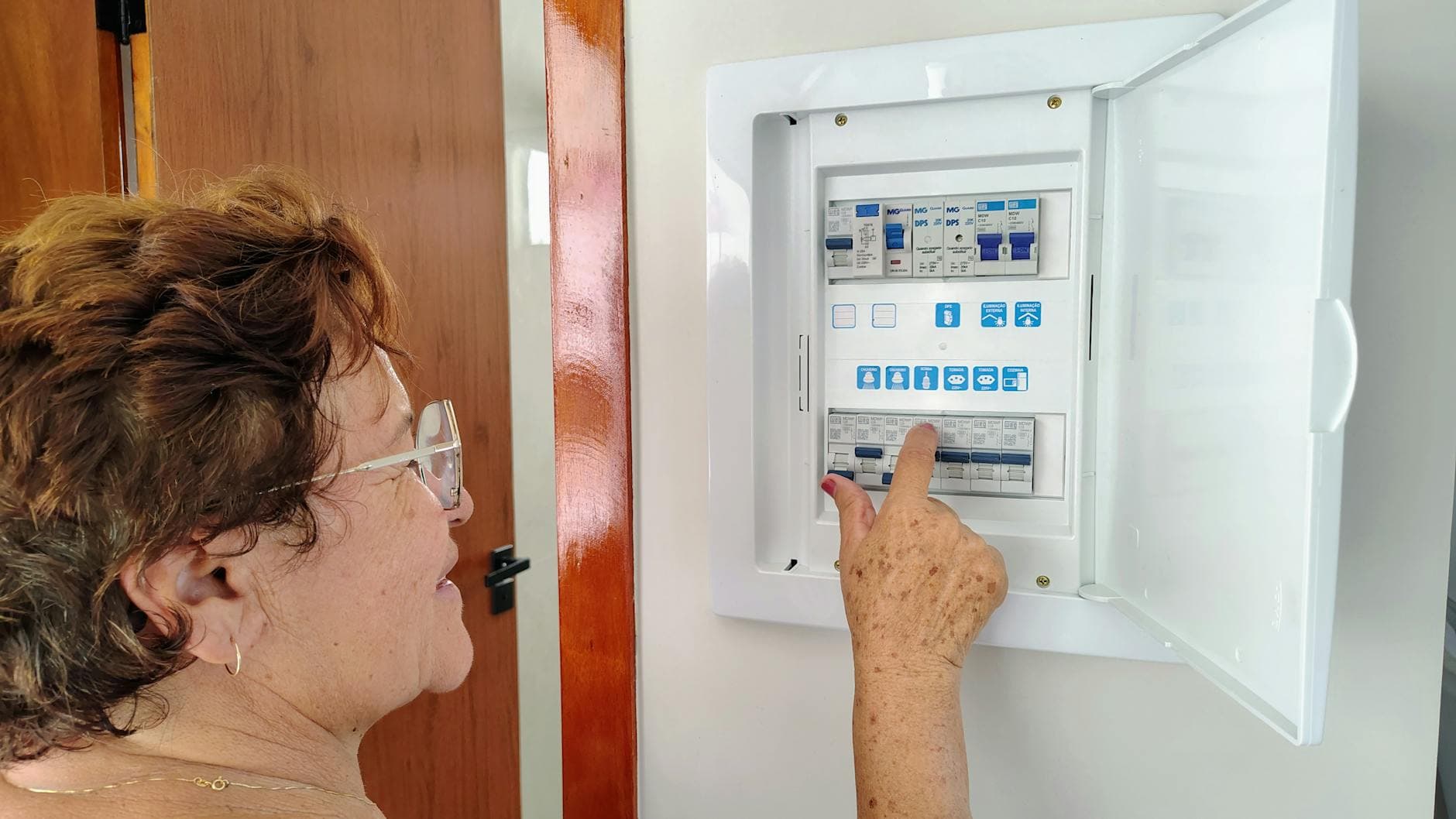
Overview
A tripped circuit breaker is a safety feature that protects your home from electrical overloads and fires. Knowing how to safely reset a tripped breaker and understand why it tripped helps you maintain your electrical system and prevent problems. Most trips are simple to resolve, but some indicate serious issues that need professional attention.
Why This Matters
Circuit breakers trip to prevent electrical fires and damage. Understanding how to reset them safely and identify the cause helps you maintain your electrical system. Repeated trips indicate problems that, if ignored, can lead to fires, damage, or electrical hazards. Proper handling ensures safety and prevents future issues.
Identifying a Tripped Breaker
Visual Signs
What to look for:
- Switch in middle position - Between ON and OFF
- Different from others - Other breakers are ON
- May show red/orange - Indicator showing tripped state
- Labeled circuit - Should indicate which area it controls
Location:
- Main electrical panel - Usually in basement, garage, or utility area
- Sub-panels - May have additional panels in other locations
- Labeled circuits - Should show what each breaker controls
Power Loss Indicators
Signs a breaker tripped:
- Lights out - In specific area
- Outlets dead - No power to plugs
- Appliances off - Devices not working
- Partial power loss - Some rooms work, others don't
Check multiple areas - Helps identify which circuit is affected.
How to Reset a Tripped Breaker
Step 1: Identify the Tripped Breaker
In the electrical panel:
- Open panel door - Carefully, don't touch internal components
- Look for switch - In middle position (tripped)
- Check all breakers - May be more than one tripped
- Note the label - Which circuit it controls
Safety: Don't touch the panel interior—only the breaker switches.
Step 2: Turn Off the Breaker
Before resetting:
- Firmly switch to OFF - Push switch fully to OFF position
- You may hear click - Breaker engaging
- Wait a moment - Brief pause before resetting
- This ensures - Breaker is fully reset
Why: Turning fully OFF first ensures proper reset.
Step 3: Reset to ON
Resetting:
- Firmly switch to ON - Push switch fully to ON position
- Should stay ON - If it trips immediately, there's a problem
- Listen for click - Indicates breaker engaged
- Check power - Verify power restored
If it trips immediately: Don't reset again—there's a problem requiring professional attention.
Step 4: Verify Power Restored
Check that power is back:
- Test lights - Turn on lights in affected area
- Test outlets - Plug in device to verify
- Check appliances - Verify they're working
- Monitor - Watch for immediate re-trip
If power restored: Problem may have been temporary overload.
Why Breakers Trip
Overloaded Circuit
What it means:
- Too many devices - Drawing more current than circuit can handle
- Exceeds capacity - Circuit rated for specific amperage
- Common cause - Most frequent reason for trips
Examples:
- Multiple space heaters - On same circuit
- High-draw appliances - Microwaves, hair dryers, etc.
- Too many devices - Multiple electronics on one circuit
Solution: Unplug some devices, redistribute load, or use different circuits.
Short Circuit
What it means:
- Hot wire touching neutral - Direct connection
- Faulty wiring - Damaged wire insulation
- Defective device - Appliance with internal short
Signs:
- Breaker trips immediately - Even with nothing plugged in
- Burning smell - May indicate short
- Sparks or smoke - Serious short circuit
Action: If breaker trips immediately with nothing plugged in, call electrician—likely wiring problem.
Ground Fault
What it means:
- Current escaping - To ground instead of neutral
- Safety hazard - Can cause shock
- GFCI protection - Special breakers detect this
Common causes:
- Moisture - Water contacting electrical
- Damaged wiring - Exposed wire touching ground
- Faulty appliance - Device with ground fault
Action: If GFCI breaker trips, check for moisture or damaged devices.
Aging Breaker
What it means:
- Breaker wearing out - May trip more easily
- Normal wear - Breakers age over time
- Loose connections - Can cause trips
Signs:
- Trips under normal load - Shouldn't trip
- Breaker feels loose - May need replacement
- Old age - 15+ years old
Action: Professional can test and replace if needed.
Safety Rules
Never Do This
Safety violations:
- Don't bypass breaker - Never remove or disable breaker
- Don't use wrong size - Never replace with larger breaker
- Don't ignore repeated trips - Indicates serious problem
- Don't work on live panel - Always turn off main breaker first
- Don't touch panel interior - Only breaker switches
These actions are dangerous and can cause fires or electrocution.
When to Call an Electrician
Call immediately if:
- Breaker trips repeatedly - Even with nothing plugged in
- Burning smell - Indicates serious problem
- Sparks or smoke - Fire hazard
- Shock hazard - Tingling from outlets or devices
- Water involved - Electrical and water don't mix
- Uncertain about cause - Better safe than sorry
Professional service: $150-$300 for diagnosis and repair.
Prevention
Avoid Overloading
Best practices:
- Know circuit capacity - Don't exceed amperage rating
- Distribute load - Use different circuits for high-draw devices
- Unplug unused devices - Reduces load
- Use dedicated circuits - For major appliances
- Check labels - Know what each circuit controls
Regular Maintenance
Keep electrical system healthy:
- Annual inspection - Professional check of panel
- Tighten connections - Loose connections cause problems
- Update old breakers - Replace aging breakers
- Label circuits - Know what each breaker controls
- Test GFCI breakers - Monthly testing recommended
Understanding Your Panel
Breaker Types
Standard breakers:
- Single-pole - 120V circuits (most common)
- Double-pole - 240V circuits (large appliances)
- GFCI breakers - Ground fault protection
- AFCI breakers - Arc fault protection (newer homes)
Each type serves different purposes and has different reset procedures.
Panel Safety
Working with electrical panel:
- Dry hands - Never work with wet hands
- Good lighting - See what you're doing
- Stand on dry surface - Not on wet floor
- One hand rule - Keep one hand in pocket (reduces shock risk)
- Turn off main - If doing any work inside panel
Cost Considerations
DIY Reset
Cost: Free (just your time)
When appropriate:
- Simple overload - Too many devices
- One-time trip - Doesn't repeat
- Clear cause - You know what caused it
Professional Service
When needed:
- Repeated trips - $150-$300
- Wiring problems - $200-$500
- Breaker replacement - $100-$200 per breaker
- Panel upgrade - $1,000-$3,000
Conclusion
Resetting a tripped circuit breaker is usually straightforward, but understanding why it tripped is important for safety. Most trips are from overloads and are easily resolved. However, repeated trips, immediate re-trips, or trips with nothing plugged in indicate serious problems requiring professional attention. Never ignore repeated trips—they're warning signs of potentially dangerous electrical problems.
Frequently Asked Questions
Why did my circuit breaker trip?
Common causes include overloaded circuit (too many devices), short circuit (faulty wiring or device), ground fault (current escaping to ground), or an aging breaker. Identifying the cause helps prevent future trips.
Is it safe to reset a tripped breaker?
Yes, it's safe to reset a breaker once. However, if it trips again immediately or repeatedly, there's an underlying problem that needs professional attention. Don't keep resetting a breaker that trips repeatedly.
What should I do if the breaker keeps tripping?
If a breaker trips repeatedly, unplug devices on that circuit and try resetting. If it still trips with nothing plugged in, there's likely a wiring problem requiring an electrician. Don't ignore repeated trips.